 English
 Español
 عربى
عربى

Search by posts
Product category
Industry News
 By Admin
Steel Tow Rope: Why Is It Still the Ultimate Choice for Heavy Duty Towing and Recovery?
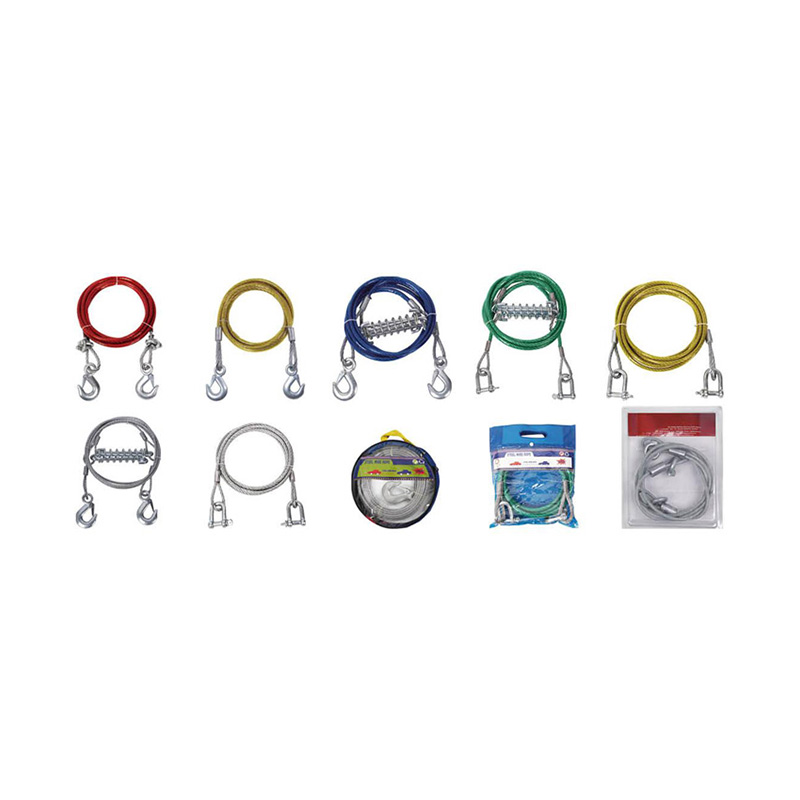
When a truck gets stuck in mud, a heavy machine breaks down on a remote construction site, or a ship needs to be pulled into dry dock, professionals reach for one tool above all others: steel tow rope. Also known as wire rope, towing cable, or recovery rope, steel tow rope remains the gold standard for extreme pulling operations. Unlike synthetic straps or elastic kinetic ropes, steel wire rope offers unmatched abrasion resistance, high tensile strength, and predictable behaviour under heavy loads. But what makes steel tow rope superior to modern alternatives? And how do you select the right construction, diameter, and grade for your fleet? This guide covers everything you need to know about steel tow rope — from metallurgy to field safety.
What Is Steel Tow Rope and How Is It Constructed?
Steel tow rope is not a simple steel cable. It is a engineered machine consisting of individual steel wires wound into strands, and strands wound around a core. The most common configuration for towing and recovery is 6x19 or 6x36 classification: six strands, each containing between 19 and 36 wires. This construction provides flexibility, fatigue resistance, and high breaking load. The core is usually fiber core (FC) for flexibility or independent wire rope core (IWRC) for maximum strength and crush resistance.
The manufacturing process includes galvanising or bright finish, and sometimes plastic impregnation to reduce internal friction and retain lubrication. Premium tow ropes feature rotation‑resistant designs such as 19x7 or 35x7 constructions for lifts and cranes, but for direct towing applications, standard 6x26 or 6x36 WS (Warrington Seale) offers the best balance of strength and bendability.
Why Steel Tow Rope Outperforms Synthetic Alternatives
Unmatched Abrasion and Heat Resistance
Synthetic ropes (nylon, polyester, Dyneema) are vulnerable to sharp edges, hot surfaces, and UV degradation. On a recovery site with jagged rocks, broken asphalt, or metal debris, a steel tow rope withstands heavy rubbing without losing strength. Steel also tolerates high temperatures generated by friction winches or brake drums, while synthetics would melt and fuse.
Predictable Stretch and Controlled Energy
Kinetic ropes stretch dramatically to store energy and “snatch” vehicles out of mud. However, that stretch can be dangerous if the rope snaps. Steel tow rope has minimal elastic elongation (typically 1-2% at working loads). This provides precise control, especially when towing on highways or positioning heavy equipment. Operators know exactly how the load will respond without dangerous recoil.
Excellent Resistance to UV, Oil, and Chemicals
Steel wire rope is unaffected by sunlight, diesel, hydraulic oil, or most industrial chemicals. Synthetic fibres lose up to 30% of their strength after prolonged UV exposure. For fleet owners who leave tow ropes exposed on truck beds or in sea‑air environments, galvanised steel rope remains serviceable for years.
Higher Strength per Diameter (for equivalent cost)
High-performance synthetics offer similar strength but at 3–5 times the price. Steel tow rope provides an economical solution for capacities from 5 tons up to 50+ tons. Heavy wreckers and rotator tow trucks still rely on ⅝” to 1” steel cables on their winches due to proven reliability.
Key Technical Parameters of Steel Tow Rope
| Parameter | Typical Description |
|---|---|
| Construction | 6x19, 6x26, 6x36 WS, 8x25; rotation‑resistant 19x7 (for higher lifts) |
| Diameter range | 6 mm (¼ inch) to 32 mm (1 ¼ inch) for heavy recovery |
| Breaking strength | From 2.5 tonnes (6mm) up to 70+ tonnes (32mm grade 1960) |
| Core type | IWRC (independent wire rope core) for max strength; Fiber core for lighter flex |
| Surface finish | Bright (uncoated), galvanised (corrosion resistant), or plastic coated |
| Grade / tensile strength | 1570 N/mm², 1770 N/mm², 1960 N/mm², 2160 N/mm² (higher grade = stronger) |
| Working load limit (5:1 safety factor) | Typically 20% of breaking strength (for towing non‑lift applications) |
| Standards | EN 12385, ISO 2408, API 9A, ASTM A1023 |
| Typical applications | Heavy‑duty towing, winch lines, ship towing, logging, mining, vehicle recovery |
Critical Applications Across Industries
Commercial Vehicle Towing and Recovery
Tow trucks, wreckers, and rotators use steel tow rope on hydraulic winches to pull disabled buses, semi‑trailers, and heavy equipment. The rope must withstand dynamic shock loads during winching and static loads during transport. Many operators prefer a ⅝” (16 mm) or ¾” (19 mm) 6x36 IWRC galvanised rope with a swaged thimble eye for secure hook attachment.
Off‑road and Construction Recovery
Recovery of stuck bulldozers, cranes, or dump trucks in mud or sand demands a steel tow rope that can be dragged over rocks, embedded in dirt, and repeatedly pulled. Steel rope does not absorb water or become brittle in freezing conditions. Field repair crews often carry 30‑50 meter lengths of 1” steel rope with protective sleeves.
Ship and Marine Towing
In harbours and inland waterways, steel tow ropes (tow lines) connect tugboats to barges or disabled vessels. Marine towing lines are typically galvanised or stainless steel for corrosion resistance, with swivel terminals to prevent kinking. The combination of high strength and low stretch allows precise manoeuvring in tight docking spaces.
Industrial Rigging and Mining
Draglines, haulage systems, and skidding operations rely on steel wire rope as both tow and anchor lines. Mining regulations often mandate steel rope with independent wire rope core and visible wear indicators. Non‑destructive testing (magnetic flux) is used to inspect ropes in service.
How to Choose the Right Steel Tow Rope for Your Fleet
Determine the Maximum Working Load
Calculate the gross weight of the heaviest vehicle or equipment you will tow. Then apply a safety factor (minimum 5:1 for ground towing). For example, to recover a 20‑ton truck, select a rope with breaking strength at least 100 tons. Do not rely on “safe working load” labels without verifying the safety factor used.
Select the Appropriate Diameter and Grade
Larger diameter + higher grade = higher breaking load. A 20 mm (0.79”) rope in grade 1770 N/mm² breaks at roughly 25 tonnes, while the same diameter in grade 1960 breaks at 28 tonnes. However, thinner high‑grade rope may be less resistant to abrasion. For severe service, choose a larger diameter with moderate grade rather than thin ultra‑high tensile ropes.
Choose Construction and Core Wisely
6x26 or 6x36 WS (Warrington Seale) constructions offer good flexibility and wear resistance. For winching with small drums, 8‑ or 9‑strand ropes provide better spooling. IWRC (independent wire rope core) adds about 7‑10% strength and reduces crush damage — highly recommended for heavy recovery.
Consider the Environment
For coastal or road‑salt areas, galvanised steel tow rope is a must. Bright (uncoated) rope will rust quickly, losing strength and leaving stains on equipment. In dusty or abrasive environments, a plastic‑impregnated rope reduces internal wear and retains lubrication longer.
Proper Inspection and Maintenance for Long Life
Visual Inspection Before Every Use
Run your hand (with a glove) along the rope to detect broken wires that protrude. Look for “bird caging” (strands separating), kinking, diametre reduction, or discolouration from heat damage. Pay special attention to sections that pass over drums or through sheaves.
Periodic Lubrication
Steel tow rope requires internal lubrication to reduce strand‑to‑strand friction. Use a penetrating wire rope lubricant or hot dip compound. Properly lubricated rope lasts up to 3 times longer. Avoid grease that only coats the surface; it attracts dirt and prevents inspection.
Storage and Handling
Coil steel tow rope in large loops (never figure‑eight) to avoid twisting. Store off the ground on pallets or rope reels, away from chemicals and humidity. When deploying, unroll rather than pull loops to prevent tangling.
Retirement Criteria
Replace the rope if you find: more than 6 broken wires in one lay length, severe kinking that permanently distorts strands, reduction of diameter by 5% or more, or evidence of heat damage (blue‑tempered colour). For safety‑critical applications, maintain a usage log and replace after a certain number of heavy pulls.
Steel Tow Rope vs. Synthetic Rope: A Practical Comparison
While synthetic ropes have gained popularity for recreational off‑roading, professional recovery fleets still rely heavily on steel. Steel wins on durability (abrasion, heat, chemical resistance) and cost per tonne of rated capacity. Synthetics are lighter and safer under sudden break (low recoil). However, steel rope’s performance in dirty, high‑temperature, and high‑abrasion environments remains unmatched. Many large operators use steel main tow lines and keep synthetic extensions for light pulling or fragile loads.
Conclusion: Steel Tow Rope – The Professional’s Reliable Partner
Steel tow rope is not old‑fashioned; it is time‑proven engineering. For heavy‑duty towing, marine work, construction recovery, and industrial pulling, it provides the strength, durability, and predictable performance that synthetic ropes cannot yet replace. By understanding construction types, grades, inspection protocols, and match to application, fleet managers and recovery technicians can ensure safe operations and long equipment life. Whether you pull 5‑ton vans or 50‑ton industrial machinery, a correctly selected and maintained steel tow rope will be your most trustworthy tool on the road and off it. Invest in quality steel wire rope, train your crew on proper handling, and carry out regular inspections. Decades of tow industry experience confirm: steel still rules.
Recommended News
-
From structure to performance, a comprehensive explanation of high-strength polyester polyester round sling
-
A comprehensive analysis of the functions, efficiency improvement, maintenance and troubleshooting of pallet trucks
-
How to make roadside assistance faster and more efficient with a tow belt?
-
What are the Key Techniques and Best Practices for Inspecting Steel Wire Ropes for Wear, Tear, and Potential Failures?
Copyright © NingBo Jiangdong Tianye Rigging Co,Ltd. Rights Reserved.
 Wholesale Webbing Hardware Manufacturers