 English
 Español
 عربى
عربى

Search by posts
Product category
Industry News
 By Admin
What is the best material for a tow rope?
Vehicle recovery and transport are highly demanding operations that require specialized equipment, careful planning, and a deep understanding of physical forces. Whether you are recovering an off-road vehicle stuck in deep mud, clearing a disabled truck from a busy highway, or securing cargo for long-distance transport, the integrity of your towing line is the single most critical factor determining the safety and success of the mission. A sudden failure of a towing line under tension can release immense amounts of stored energy, leading to catastrophic vehicle damage, severe physical injuries, or even loss of life.
Among the various options available in the automotive and industrial markets, selecting the appropriate material for a towing line is a complex decision. Historically, heavy metals dominated the industry, and the classic steel tow rope remains a trusted standard for heavy-duty commercial towing. However, advancements in polymer chemistry and materials science have introduced highly capable synthetic alternatives, including nylon, polyester, and ultra-high-molecular-weight polyethylene.
To determine which material is truly the best for your specific towing and recovery requirements, it is essential to examine the physical properties, mechanical behaviors, and practical limitations of both metallic and synthetic options.
The Mechanical Excellence of Steel Tow Ropes
The steel tow rope has been a cornerstone of industrial towing, maritime salvage, and heavy-duty vehicle recovery for over a century. Its continued dominance in specific industrial sectors is a testament to its unmatched physical durability and metallurgical strength.
Structural Construction and Carbon Steel Metallurgy
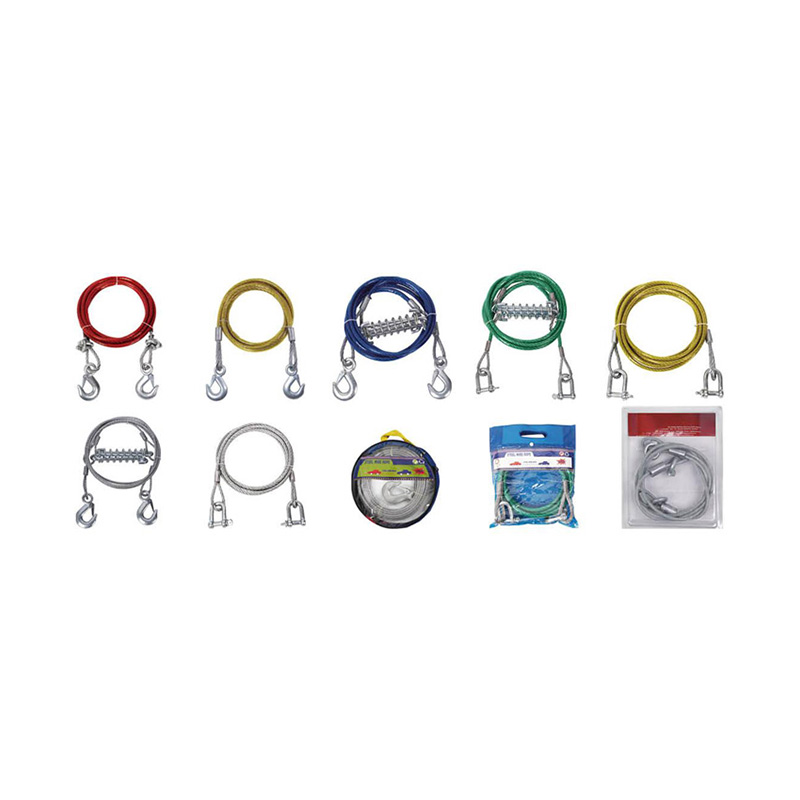
A professional steel tow rope is not a single solid metal wire, but rather a highly complex, engineered assembly of dozens of individual high-carbon steel wires. The manufacturing process begins by drawing carbon steel through series of dies to achieve high tensile strength and flexibility. These individual wires are then tightly spun together to form strands, and multiple strands are wrapped around a central core to create the finished rope.
The most common industrial configurations include the seven by nineteen construction, which features seven strands of nineteen wires each, and the six by thirty-six construction, which offers even greater flexibility.
The central core of the steel tow rope can be made of independent wire rope or synthetic fibers, depending on whether the application requires maximum crushing resistance or enhanced flexibility.
This multi-wire helical design ensures that if a single wire breaks due to localized wear, the remaining hundreds of wires continue to distribute and support the load, preventing sudden and complete failure of the cable under standard operating conditions.
Extreme Abrasion Resistance and Environmental Durability
The primary structural advantage of a steel tow rope is its exceptional resistance to physical abrasion, cutting, and environmental degradation. During real-world vehicle recovery operations, the towing line frequently drags across rough asphalt, jagged rocks, sharp gravel, concrete barriers, and metal chassis components.
Synthetic fibers are highly vulnerable to localized cutting and friction melting when subjected to these abrasive forces under tension.
Steel, with its high surface hardness, can withstand continuous scraping and grinding against hostile surfaces with minimal loss of structural integrity.
Additionally, steel is highly resistant to extreme temperatures, ultraviolet light degradation, and chemical exposure from automotive fluids such as motor oil, gasoline, and hydraulic fluids.
This ruggedness makes a steel tow rope highly suitable for harsh industrial environments, commercial wreckers, and heavy-duty agricultural recovery where equipment must perform reliably under the most punishing physical conditions.
Synthetic Fiber Alternatives in Modern Vehicle Recovery
While steel remains highly valued for its ruggedness, synthetic materials have transformed the vehicle recovery landscape, offering lightweight and highly specialized performance characteristics for different towing scenarios.
Nylon Tow Straps and Kinetic Energy Recovery
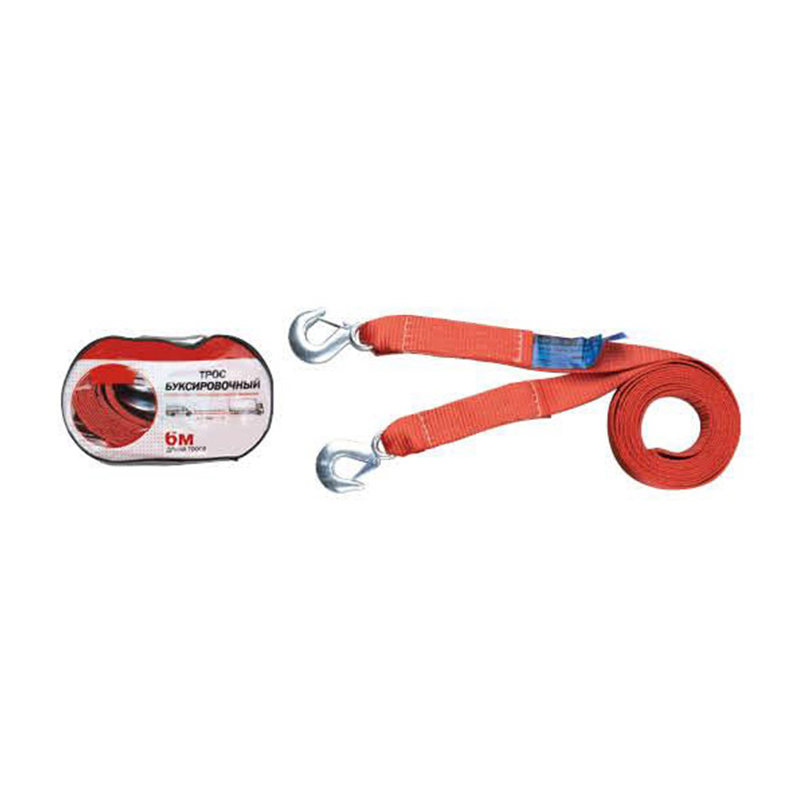
Nylon has emerged as a highly popular material for off-road vehicle recovery, particularly in mud, sand, and deep snow. The defining physical characteristic of nylon is its high elasticity, with quality nylon recovery straps capable of stretching up to thirty percent of their original length when subjected to tension.
This high elasticity is utilized to perform kinetic energy recovery, commonly referred to as snatching.
During a kinetic recovery, the recovery vehicle accelerates away from the stuck vehicle, causing the nylon strap to stretch and store kinetic energy like a massive rubber band. Once the strap reaches its maximum stretch, it gently but powerfully contracts, transferring the stored energy to the stuck vehicle and popping it out of the obstacle.
This elastic behavior significantly dampens the initial shock load on the recovery anchors of both vehicles, reducing the risk of tearing chassis mounts or causing structural damage.
However, because nylon absorbs a massive amount of water, which temporarily reduces its strength by up to ten percent, these straps must be thoroughly dried and maintained to prevent rot and structural degradation over time.
Polyester Tow Ropes and Static Pulling
Polyester is often confused with nylon, but its chemical structure and physical performance are fundamentally different. While nylon is chosen for its elasticity, polyester is selected specifically for its exceptionally low stretch properties, typically stretching less than three percent under full load.
This low stretch makes polyester highly suitable for static pulling operations, flat towing a disabled vehicle on highways, and winch extension lines where consistent, controlled tension is required.
Unlike nylon, polyester is highly hydrophobic, meaning it does not absorb water or lose its mechanical strength when wet.
It also possesses superior natural resistance to acidic chemicals and ultraviolet light, allowing it to retain its structural integrity during prolonged exposure to direct sunlight.
Because polyester does not store significant kinetic energy under tension, it behaves much more predictably than nylon, making it an excellent choice for controlled, slow-speed towing and rigging operations.
Ultra-High-Molecular-Weight Polyethylene Ropes
Often referred to by commercial brand names such as Dyneema or Spectra, ultra-high-molecular-weight polyethylene, which is commonly abbreviated as UHMWPE, represents the pinnacle of modern synthetic rope technology.
This material consists of extremely long chains of polyethylene, with all molecules aligned in the same direction to provide incredible tensile strength.
A synthetic rope made of UHMWPE is physically stronger than a steel tow rope of equivalent diameter, yet it weighs only a fraction of the weight of steel.
This extreme strength-to-weight ratio allows operators to handle massive recovery capacities with a rope that is lightweight enough to float on water.
Furthermore, because UHMWPE possesses virtually no elasticity, it does not store dangerous levels of kinetic energy under tension.
If a UHMWPE rope snaps under load, it simply drops to the ground with negligible snapback, making it infinitely safer for nearby personnel compared to a snapping steel cable or a highly stretched nylon strap.
However, this material is highly sensitive to heat buildup caused by friction and is significantly more expensive than standard steel or polyester options.
Comparative Evaluation of Towing Materials
To help professionals select the most appropriate towing material, the following table compares the essential characteristics of steel and synthetic fibers across critical operational metrics.
|
Material Category |
Relative Weight |
Elasticity and Stretch |
Abrasion Resistance |
Stored Kinetic Energy |
Primary Failure Risk |
|---|---|---|---|---|---|
|
Steel Tow Rope |
Exceptionally heavy; requires gloves and mechanical assistance |
Extremely low; virtual zero stretch |
Outstanding; resists rocks, metal edges, and heat |
High; dangerous recoil if the cable snaps |
Wire kinking, rust, and hand puncturing from broken strands |
|
Nylon Fiber |
Lightweight; easy to coil and transport |
High; up to thirty percent elastic stretch |
Low to moderate; prone to friction melting |
Exceptionally high; violent recoil if snapped |
Abrasion cutting, water weakening, and seam tearing |
|
Polyester Fiber |
Lightweight; resistant to water absorption |
Low; under three percent static stretch |
Moderate; better than nylon but vulnerable to sharp edges |
Low; predictable behavior under tension |
Friction burns and localized cutting under high tension |
|
UHMWPE Synthetic |
Extremely lightweight; floats on water |
Extremely low; zero stretch properties |
High; but highly sensitive to high-temperature friction |
Minimal; drops safely to the ground if fractured |
Thermal degradation, high purchase cost, and knot weakening |
Structural Dynamics of Recovery vs. Transport Towing
Selecting the best material is not merely about finding the strongest option; it requires matching the mechanical behavior of the material with the specific physics of the towing operation.
Kinetic Recovery Dynamics and Energy Management
Kinetic recovery is a dynamic, high-impact operation used to extract a vehicle that is deeply bogged down in a soft medium like mud, sand, or snow. In this scenario, the resistance force holding the stuck vehicle is exceptionally high, often exceeding the weight of the vehicle itself due to the vacuum effect of the mud.
Using a rigid, low-stretch material like a steel tow rope or a polyester line for kinetic recovery is extremely dangerous.
Because these materials do not stretch, the sudden stop when the recovery vehicle reaches the end of the line transfers an immense shock load to the frame of both vehicles. This shock load can easily rip recovery hooks out of the metal chassis, bend frame rails, or snap the towing line instantly.
Therefore, for dynamic kinetic recoveries, high-elasticity nylon is the only appropriate material, as it acts as a mechanical buffer, transforming a harsh, sudden jerk into a smooth, controlled pulling force.
Flat Towing and Road Transport Dynamics
Flat towing involves pulling a disabled but rolling vehicle over a public road or highway at moderate speeds. In this scenario, the goal is to maintain a consistent distance between the two vehicles, navigate turns smoothly, and manage deceleration without the towed vehicle colliding with the rear of the towing vehicle.
Using an elastic nylon strap for flat towing is highly dangerous, as the constant stretching and contracting causes the towed vehicle to surge forward and backward unpredictably, a phenomenon known as the Yo-Yo effect.
This surging makes it incredibly difficult for the driver of the towed vehicle to maintain control and can lead to rear-end collisions.
For road transport and flat towing, low-stretch materials such as polyester or a steel tow rope are the superior choices.
These rigid materials ensure a direct, consistent mechanical connection, allowing the towing vehicle to control the speed and momentum of the trailing vehicle with high precision and predictability.
Practical Safety Standards and Maintenance Guidelines
Regardless of the material you choose, the safety and longevity of your towing equipment depend on regular inspections, proper storage, and correct rigging techniques.
Inspection Protocols for Steel and Synthetic Lines
Every towing line must be thoroughly inspected before and after every single use to detect early signs of structural compromise.
When inspecting a steel tow rope, operators must look for kinking, which occurs when the rope is bent too tightly, permanently deforming the wire strands and reducing the strength of the cable by up to fifty percent.
Operators must also run a gloved hand along the length of the cable to check for bird caging, which is the separation of outer strands, and individual broken wires. If there are more than three broken wires within a single strand, or if the cable shows visible signs of red rust and pitting corrosion, it must be retired from service immediately.
For synthetic ropes and straps, the inspection focus shifts to chemical, thermal, and physical wear.
Inspect the entire length of the strap for frays, cut stitching on the loops, and localized hardening, which indicates friction melting from heat buildup.
If a synthetic strap feels stiff, crusty, or has a glazed appearance, the fibers have suffered thermal damage and are prone to sudden snapping under load.
Additionally, look for color fading, which is a primary indicator of ultraviolet light degradation. If a once-vibrant orange strap has faded to a pale pink, the solar radiation has weakened the polymer chains, and the strap must be replaced to ensure safety.
Safe Attachment Points and Hardware Selection
The connection between the towing line and the vehicle chassis is often the weakest link in the entire recovery system.
A common and highly dangerous mistake is wrapping a tow rope around a bumper, axle tube, or steering linkage, as these components are not engineered to withstand heavy pulling forces and can easily shear off under tension.
Always connect the towing line to dedicated, frame-mounted recovery points, such as heavy-duty tow hooks or receiver hitch loops that are welded directly to the vehicle chassis.
When securing the connection, use high-quality steel D-ring shackles or modern synthetic soft shackles made of UHMWPE.
If utilizing steel shackles, always screw the pin in completely and then back it off a quarter turn to prevent the pin from binding under the immense pressure of the pull.
Additionally, never connect two recovery straps together by threading one loop through the other and inserting a wooden stick or a metal bolt, as this creates a highly volatile, heavy projectile that will fly through the air with lethal velocity if the strap snaps.
Instead, always use a dedicated shackle or a specialized strap-joining block to secure the connection safely.
Energy Dampening and Area Clearance
To protect bystanders and vehicle occupants in the event of a line failure, operators should always implement energy dampening techniques during high-tension recoveries.
This involves placing a heavy, flexible object, such as a specialized recovery damper, a heavy moving blanket, a canvas sail, or even a thick rubber floor mat, over the center of the towing line.
If the steel tow rope or synthetic strap snaps, the weight of the damper absorbs the energy and forces the broken ends of the line to fall harmlessly to the ground rather than whipping through the air.
Finally, establish a strict safety perimeter around the recovery zone.
No bystanders should ever be allowed to stand within a radius equal to at least one and a half times the total length of the extended towing line.
Furthermore, no one should ever stand directly in line with the pull, as a snapping cable will travel in a straight line toward the front or rear of the vehicles.
By keeping the recovery zone clear of personnel, maintaining your equipment to the highest standards, and selecting the appropriate material for your specific towing scenario, you can minimize risks and ensure a safe, efficient, and successful vehicle recovery operation.
Recommended News
-
From structure to performance, a comprehensive explanation of high-strength polyester polyester round sling
-
A comprehensive analysis of the functions, efficiency improvement, maintenance and troubleshooting of pallet trucks
-
How to make roadside assistance faster and more efficient with a tow belt?
-
What are the Key Techniques and Best Practices for Inspecting Steel Wire Ropes for Wear, Tear, and Potential Failures?
Copyright © NingBo Jiangdong Tianye Rigging Co,Ltd. Rights Reserved.
 Wholesale Webbing Hardware Manufacturers