 English
 Español
 عربى
عربى

Search by posts
Product category
Industry News
 By Admin
What Is a Lifting Sling Used For? Types, Uses, Safety, and Selection Guide
A rigger working in a precast concrete yard loops a round sling around a four-ton pipe, clips the sling’s collar to the overhead crane hook, and gives the lift signal. The sling drapes over the curved surface, stretches slightly, and takes the full weight without scratching the concrete or digging into it. Ten minutes later, the same crew uses a pair of flat webbing slings to lift a steel mold off the casting bed. In both cases, the tool that actually touches the load is not the crane hook — it is the lifting sling. So what is a lifting sling used for? The short answer is that a lifting sling connects the hook of a crane, hoist, gantry, or other lifting machine to the load that needs to be moved. It is the flexible or semi-flexible link between the lifting device and the cargo, and it does three jobs at the same time: it supports the load’s weight, spreads the force over the contact area so the load is not damaged, and lets the rigger control how the load hangs, tilts, and swings during the lift. That definition only becomes useful when you look at the practical details. The right sling for a concrete pipe is not the right sling for a red-hot steel ingot, and the right sling for a polished machine shaft is not the right sling for a bundle of reinforcing bars. This article explains the core lifting tasks that slings are used for, breaks down the main sling types, shows how the hitch angle changes capacity, and gives you the inspection and selection points that keep a sling safe on the job. A lifting sling is a load-bearing assembly designed to be used in conjunction with a crane or other lifting device. It consists of a body — woven polyester webbing, synthetic yarn in a tubular cover, alloy steel chain, or steel wire rope — and, in most designs, end fittings such as sewn eyes, hooks, master links, or loops that allow attachment to both the crane hook and the load. Endless slings do not need separate fittings at all: the sling itself is one continuous loop that the rigger chokes or baskets around the load. The operating principle is straightforward. The crane hook provides vertical force; the sling transfers that force to the load. Because the sling is flexible, it can wrap around shapes that a rigid hook cannot grip. Because it spreads contact over a wide area, it keeps the load’s surface pressure low enough to avoid marks, cuts, or crushing. And because the sling has a known working load limit, the rigger can calculate exactly how much weight the system is designed to carry — provided the sling is correctly hitched and the angle is accounted for. Lifting slings are divided into two broad families. Synthetic textile slings — flat webbing slings, round slings, and endless webbing slings — dominate general industry because they are light, flexible, and kind to the load. Metallic slings — chain slings and wire rope slings — are used where heat, abrasion, or very high strength makes textiles unsuitable. Each family has a specific job, and the most common rigging errors come from using one family where the other is required. Put simply, a lifting sling is used whenever a load must be raised or lowered by a mechanical lifting device and the load does not have a hook-compatible attachment point. The sling bridges the gap between the single crane hook and the geometry of the load. In practice, that means four recurring tasks: Because those tasks appear in almost every sector that moves heavy objects, the practical uses of lifting slings span a very wide range of industries. On construction sites, lifting slings handle precast concrete beams, panels, and pipes; rebar bundles; steel columns and trusses; formwork; and site machinery. Round slings and endless slings are standard for concrete because their soft contact surface does not chip the edges or leave black marks. Webbing slings lift steel that will later be coated or painted, since chains can scratch the surface. Chain slings appear in areas where cutting and welding sparks are present, because hot particles can melt synthetic fibers almost instantly. Inside factories, overhead cranes move motors, gearboxes, press dies, machine frames, pumps, and transformers. Maintenance crews rig loads with flat webbing slings because they are easy to store, easy to inspect, and flexible enough to sling an oddly shaped component. Machine installers use adjustable chain slings when they need to level a load or when the lifting points are far apart. The same slings are used to remove and install heavy tooling, so the WLL and length have to be matched to the tallest and heaviest components in the workshop. In ports and freight yards, slings are used under cranes to load timber, steel coils, machinery, pipes, and break-bulk cargo. Wire rope slings and chain slings are common for bundles of steel because the cargo is abrasive and often has sharp edges. Synthetic slings are used for timber, paper rolls, and packaged goods where surface damage costs money. In container freight operations, lifting slings are frequently paired with spreader beams to carry heavy lifts that exceed the safe span of a standard container spreader. Wind turbine blades and nacelles are lifted with large-capacity round slings and multi-leg chain slings that conform to the curved composite surfaces. Power transformers, generators, and pressure vessels are rigged with multiple slings connected to a spreader beam so the load stays level. On oil and gas sites, wire rope slings handle heavy pipe, valves, and wellhead equipment, while chain slings are used where the lift points are close together and the components are hot or abrasive. Notice that one sling type does not serve every industry. A construction site might live on round slings and chain slings; a warehouse might need only flat webbing slings; a steel mill needs chain slings almost exclusively. This is why selection always starts with the load and the environment, not with what happens to be on the shelf. If you want to match a specific material handling task to the right rigging approach, our application-specific rigging guidance gives the practical breakdown. The material and construction of a sling determine almost everything about how it performs: the working load limit, the resistance to heat and chemicals, the way it grips the load, and the amount of damage it can cause to the cargo. Understanding the five main families is the foundation of safe sling selection. A webbing sling is made from multiple layers of flat woven polyester webbing, sewn into eyes at one or both ends. The flat, wide bearing surface spreads the load and protects coated, painted, or machined surfaces. Webbing slings are the workhorses of general industry: they are light, easy to inspect, low in price, and available with sewn eyes in almost any length. Webbing slings are used for machine moving, steel handling, construction materials, and virtually any lift where the load has a surface that should not be scratched and where the sling will not be dragged over sharp edges. Under EN 1492-1, polyester webbing slings are color-coded by capacity — violet for one tonne, green for two tonnes, yellow for three, grey for four, red for five, brown for six, blue for eight, and orange for ten. The color band lets a rigger verify the WLL at a glance, but the printed label remains the authoritative reference. What limits a webbing sling is its vulnerability to cutting and abrasion. If the load has sharp corners — a steel plate edge, a concrete spall, or a rolled flange — the webbing must be protected with a corner protector or edge guard. Used correctly with edge protection, a webbing sling is one of the safest and most economical lifting tools available. A round sling is an endless loop of high-strength synthetic yarn, typically polyester, contained inside a protective tubular cover. Unlike a flat webbing sling, the round sling has a circular cross-section and acts as a very flexible bundle. The yarn inside the cover can shift slightly under load, which lets the sling conform closely to the shape of the load and distribute the force over an even wider area. Round slings are used for exactly the jobs where surface protection matters most: precast concrete, plastic pipes, polished metal, glass, and coated components. They also shine in choker hitches because the round cross-section grips cylindrical loads more effectively than a flat belt does. Despite their soft feel, round slings reach high capacities — well beyond twenty tonnes in a single sling — so they are seen in heavy prefabrication and infrastructure work as well as in light assembly. Their weakness is the same as any textile: sharp edges, heat, and chemical attack can destroy them quickly, and the cover must be inspected carefully because damage underneath is not always visible from the outside. An endless webbing sling is a continuous loop of flat woven polyester webbing, sewn into a circle with no separate fittings. It can be used in a vertical hitch, a choker hitch, or a basket hitch by simply looping it through itself. Because there are no metal end fittings, the sling is completely soft and can be threaded into tight spaces where a sling with hooks would not fit. Precast concrete plants use disposable endless webbing slings for lifting freshly cast concrete products. These one-way slings are inexpensive enough to be used for a single lift and then cut off the product and discarded, which avoids the cost and labour of retrieving a reusable sling from a finished concrete piece. For general plant use, reusable endless slings are common for lifting pipes, lumber, and other long goods where a continuous loop gives a natural basket. Chain slings are built from alloy steel chain, usually Grade 80 (G80) or Grade 100 (G100), with hooks, master links, and connecting links that are matched to the same grade. The chain is extremely resistant to cutting, abrasion, and heat, which makes it the only practical choice for foundries, steel mills, shipyards, and demolition work where synthetic slings would not survive one shift. Grade 80 chain slings are used up to 200°C, and above that temperature the working load limit must be derated. G100 chain offers a higher capacity for the same chain diameter, which reduces the weight a rigger has to handle. Chain slings are also used in multi-leg bridles because chain is easy to shorten with a grab hook and because each leg holds its position without sagging. The main disadvantages are weight, cost, and the fact that chain can damage the load surface; riggers must place chain carefully and use protective pads when lifting finished goods. Wire rope slings are made from steel wire rope spliced or pressed into an eye at each end, often with a thimble to protect the eye from wear. They combine very high strength with low stretch: a wire rope sling barely elongates under load, which keeps the load stable during precision placement. Wire rope slings are used for extremely heavy lifts, for loads with sharp steel edges, and in environments where synthetic materials would be attacked by chemicals. The stiffness of wire rope is both its strength and its limitation. It does not conform tightly to the load the way a textile sling does, so the contact area is small and pressure on the load is high. Wire rope slings must be protected with corner guards when used on edges, and broken wires, kinks, birdcaging, and corrosion are all immediate reasons to take a sling out of service. A sling’s rated working load limit is based on a straight vertical pull. The moment you wrap the sling around a load, choke it, or spread two legs at an angle, the effective capacity changes — sometimes dramatically. The hitch is not just a matter of convenience; it is the single most important factor in whether a lift is safe. In a vertical hitch, the sling runs straight from the crane hook down to the load’s lifting point. The sling carries its full rated WLL, and the load must be secured so it cannot rotate or fall out. Vertical hitches are used when the load has a lifting lug, eyebolt, or other fixed attachment point. Two vertical slings sharing a load must be treated as a two-leg bridle, not as two independent slings, because the load distribution depends on the geometry. In a choker hitch, the sling is wrapped around the load and the eye is passed back through itself, so the sling tightens around the load as it is lifted. The choker gives a firm grip on cylindrical or bundled loads and prevents them from sliding. The cost is capacity: a choker hitch is rated at approximately 75% of the vertical capacity for chain and wire rope slings and 75–80% for synthetic slings, depending on the angle of choke. If the choke angle is more than 120°, the capacity drops further. Never choke a sling by tying a knot — a knot can reduce capacity by 50% or more and destroys the textile structure. In a basket hitch, the sling is passed under the load and both eyes are placed on the crane hook, so the load hangs in a cradle made of two parts of the sling. When the two parts are vertical and the load is balanced, a basket hitch gives roughly twice the single-leg capacity. Basket hitches are ideal for long loads, pallets, pipe bundles, and loads without lifting points. The critical risk is sliding: if the load is unbalanced or slippery, it can roll out of the basket, so the rigger must keep the center of gravity inside the cradle and use tag lines. A bridle hitch uses two, three, or four sling legs connected to a master link or hook. Bridles give stability because the load is supported from multiple points, and they are the standard way to lift machinery, tanks, and structural assemblies with existing lifting lugs. The tension in each leg increases as the angle between the legs increases, so the rigger must calculate the load on each leg using the angle factor table. The pattern is clear: as the legs become more horizontal, the force in each leg climbs quickly. At a 30° angle from horizontal, a four-tonne load puts four tonnes of tension in each leg — the slings are already loaded to the maximum before the lift starts. This is why good rigging practice keeps the horizontal angle above 45° whenever possible, and why most standards and manufacturers advise against rigging below 30°. If your layout forces a shallow angle, you must either use a stronger sling or add a spreader beam to raise the effective angle. There is no universal sling for every job. The correct selection comes from answering four questions in order: what the load is, what the environment does, how much capacity is needed, and what standard the sling must meet. The load’s weight must be known accurately. In practice, many incidents happen because the weight was estimated instead of weighed, and the sling was selected "to be safe." A sling is never selected this way: the actual weight, plus any impact factor, must stay below the WLL after the hitch factor is applied. The load’s shape decides the hitch. Cylindrical loads are choked; long flat loads are basketed; loads with lugs are lifted with a bridle. If the load has sharp edges — flanges, stiffeners, concrete spalls — you need edge protection in the same purchase order as the sling. Temperature is the first filter. Polyester slings are generally rated for use between -40°C and +100°C. Above 100°C, synthetic strength falls quickly, so chain slings take over. In foundries and steel mills, G80 chain is used up to 200°C; above that, the WLL must be derated. Chemical exposure is the second filter. Polyester resists most acids better than nylon but is attacked by strong alkalis; nylon fails in acids. If the sling will be splashed by solvents, weld spatter, or aggressive chemicals, choose a material that is compatible or protect the sling. Ultraviolet exposure matters too: a sling stored in direct sunlight for months will degrade even if it looks normal, because the sun attacks the polymer at a microscopic level. The working load limit is the maximum load the sling is designed to support in a vertical hitch under normal conditions. It is not the same as the breaking strength. Synthetic textile slings manufactured to EN 1492-1 and EN 1492-2 are built with a safety factor of 7:1, meaning the breaking strength is seven times the WLL. Chain slings to EN 818 typically offer a 4:1 safety factor, and general-purpose wire rope slings around 5:1. The safety factor is already included in the rated capacity, so you do not add a factor on top — but you do have to apply the angle and hitch reductions. Never exceed the WLL, never add extra load because "it looks strong enough," and never use a sling whose identification tag is missing or unreadable. In the United States, sling use in general industry is regulated by OSHA 1910.184, and design and inspection guidance comes from ASME B30.9. In Europe, synthetic slings are covered by EN 1492-1 (webbing), EN 1492-2 (round slings), and chain slings by EN 818. A compliant sling carries a durable label or tag stating the WLL, the manufacturer, and the standard. For critical applications, request a test certificate or certificate of conformity for the batch. When evaluating a supplier, confirm that the production facility holds ISO9001 and that the slings are tested and documented — a lifting sling is a safety device, and traceability has to be part of the purchase. Also plan for the accessories that protect the sling and the load. Corner protectors, sling protectors, and sleeves are not optional extras; they are what allow a high-strength textile sling to work safely against a sharp edge. Fitting a steel or plastic corner protector is far cheaper than replacing a cut sling — and it can mean the difference between a routine lift and a dropped load. A sling that looks fine from across the workshop can be one lift away from failure. The rule is simple: inspect before every use, and have a documented formal inspection carried out regularly by a competent person. In normal service, that formal inspection is usually performed at least once every twelve months, but more frequently in severe service or after any incident. The point is not to follow a calendar for its own sake — it is to catch damage while it is still visible. Run your hand along the full length of the sling, section by section. For synthetic slings, feel for cuts, snags, broken fibers, exposed core yarn, glazing, or hard spots caused by heat. Look at the stitching: the sewn eyes carry the load, and any broken, pulled, or abraded stitches are a red flag. Check the label: if it is cut, faded, or detached, the sling cannot be used because the WLL can no longer be verified. Then inspect the hardware. Hooks must have functioning safety latches; the hook throat must not be visibly opened or twisted; side plates, pins, and master links must show no cracks, heavy corrosion, or wear at the bearing surfaces. Some defects mean immediate retirement. The list varies slightly between sling types, but the facts below are the accepted criteria in the industry: When in doubt, take the sling out of service. The cost of a replacement sling is negligible compared with the consequences of a failure under load. A practical routine that covers the daily checks, cleaning, and storage of textile slings is described in our article on the routine maintenance of lifting belts. Storage determines how long a synthetic sling keeps its original strength. Hang slings on racks or hooks so they are not coiled on the floor, and keep them away from direct sunlight, moisture, solvents, and weld spatter. Chain slings should be hung on a dedicated rack to avoid tangling, and hooks should be protected with plastic caps so they do not damage other equipment. When a sling is not being used, it should never be left draped over a sharp edge or lying where a forklift can run over it. A sling that is stored properly will give years of service; one that is treated carelessly can be ruined in a single afternoon. Most lifting sling failures are not caused by a defect in the sling itself. They are caused by misuse — and the damage that abuse creates. Knowing the common mistakes is the first defense against becoming a statistic. The pattern behind all these mistakes is the same: treating the sling like ordinary equipment instead of like a precision safety component. A sling is engineered, tested, and certified to a specific capacity under specific conditions. Every shortcut removes one layer of that margin. A lifting sling is more than a piece of webbing or chain; it is a certified load-bearing component. The quality of the raw material, the control of the sewing or assembly process, the accuracy of the testing, and the reliability of the labeling all determine whether the sling will do its job when it matters most. Serious manufacturers control the source of the polyester yarn and steel chain, use calibrated testing machines to verify each batch, and mark every sling with a traceable code. When you buy a webbing sling, the width and number of load-bearing layers must match the stated capacity; if the manufacturer saves on layers or uses off-grade fiber, the safety factor quietly disappears. For chain slings, the welding of links and the matching of hooks must follow the relevant grade standard, and each component must be proof-tested before it is shipped. The company's own factory background matters in this context. NingBo Jiangdong Tianye Rigging Co., Ltd. has operated its own manufacturing plant since 2009, producing flat webbing slings, round slings, endless slings, cargo lashing, and G80/G100 chain components for the lifting and rigging market. The factory operates under ISO9001 quality system management and holds third-party GS certification from German Rhineland inspection bodies, and its products are exported to more than forty countries across Europe, the Americas, the Middle East, Africa, and Asia. When a supplier can point to a controlled manufacturing process, batch-tested products, and a track record of international certifications, the sling you receive carries more than a printed label — it carries accountability. A lifting sling is used for one fundamental purpose: to connect a load to a lifting machine safely and without damage. But the details turn that simple statement into a discipline. The right sling type protects the cargo, the right hitch spreads the force, the right capacity absorbs the actual weight with room for angle factors, and the right inspection schedule catches damage before it becomes a failure. When you plan any lift, start with the load, not the sling. Weigh it, look at its shape and edges, check the environment for heat, chemicals, and sharp corners, then select the sling and the hitch that match the geometry. Apply the working load limit, apply the angle factors, protect the sling from edges, and inspect it before every use. Those steps sound obvious, but they are the exact steps that separate a professional rigging operation from an accident waiting to happen. The sling is the part of the lifting system that the rigger holds in their hands, wraps around the cargo, and trusts with the full weight of the load. Choose it carefully, treat it properly, and replace it without hesitation when it shows the first sign of damage. That is what a lifting sling is for — and that is how it earns its place as one of the most important safety devices in any workplace that lifts heavy objects.What Exactly Is a Lifting Sling?
What Is a Lifting Sling Used For? Core Tasks and Industry Applications
Construction and Steel Erection
Factories, Machine Shops, and Maintenance Departments
Ports, Terminals, and Freight Handling
Energy, Oil and Gas, and Heavy Engineering
Industry
Typical loads
Commonly used sling type
Reason
Precast concrete
Pipes, beams, panels
Round slings, endless webbing slings
Soft contact, no edge damage, easy choker and basket hitches
Steel fabrication
Columns, plates, beams
Webbing slings, chain slings
Surface protection for coated steel; heat resistance near welding
Machine building
Motors, gearboxes, dies
Flat webbing slings
Flexible, easy to handle, protects machined surfaces
Port handling
Timber, coils, machinery
Wire rope slings, chain slings
Abrasion resistance, high capacity, long service life
Wind energy
Blades, nacelles, towers
Round slings, multi-leg chain slings
Conforms to curved surfaces, high capacity, controlled rigging
Foundries and steel mills
Ingots, molds, ladles
G80/G100 chain slings
Resists heat, sparks, and abrasion
General maintenance
Pumps, compressors, motors
Webbing slings
Versatile, quick to rig, low cost
The Main Types of Lifting Slings and What Each One Is Used For
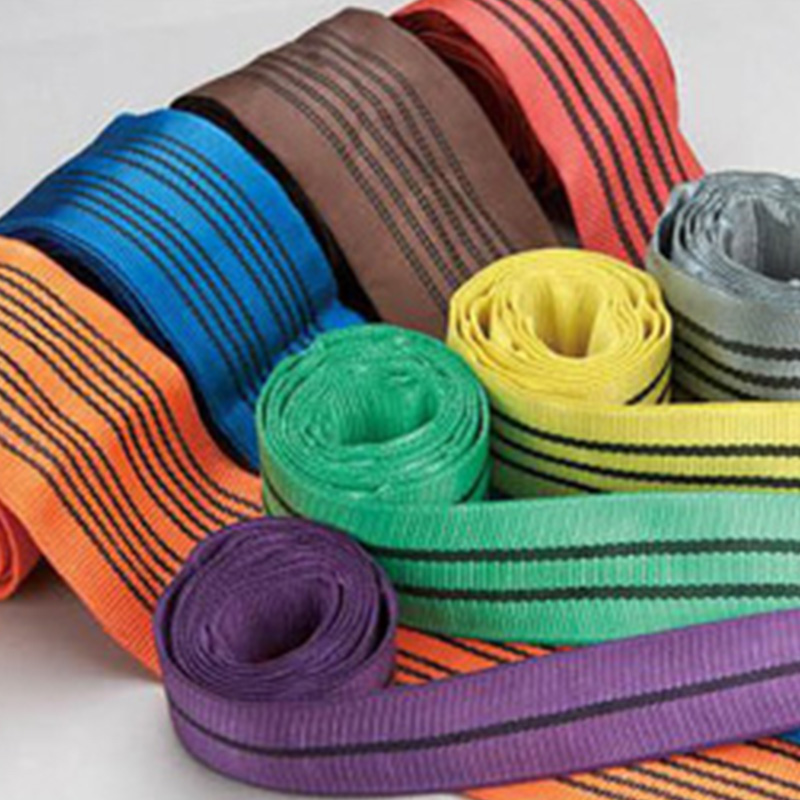
Webbing Slings (Flat Slings)
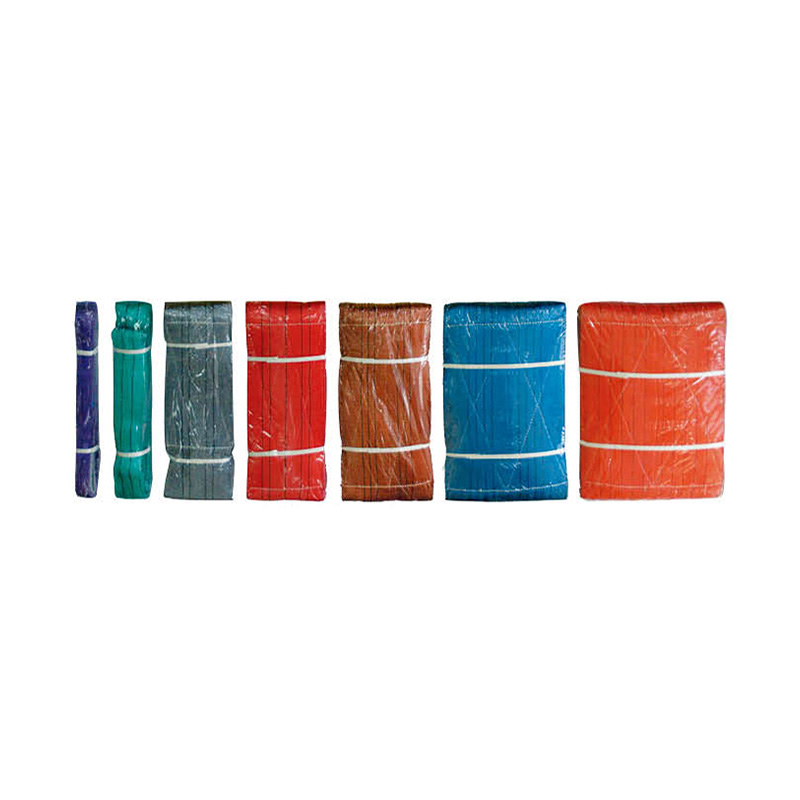 Reusable Polyester Webbing Sling with Color-Coded Capacity RatingsThis flat webbing sling comes in multiple ply configurations and lengths up to 300 mm width, with a 7:1 safety factor. It suits loads needing surface protection, but pairing it with edge guards is essential for sharp corners.View Product →
Round Slings
 High-Capacity Polyester Round Sling for Surface-Sensitive LoadsA soft endless loop with no metal fittings, this round sling reaches up to 20 tonnes WLL and works well in choker hitches. It protects delicate materials like concrete, pipes, and glass, though careful cover inspection is required.View Product →
Endless Webbing Slings
Chain Slings
Wire Rope Slings
Sling type
Material
Typical WLL range
Key strength
Main limitation
Best suited for
Webbing sling
Polyester webbing
0.5 – 20 t
Soft, wide contact, low cost
Vulnerable to cutting and heat
General industrial lifting, machine moving
Round sling
Polyester yarn in a cover
1 – 30 t+
Very flexible, conforms to load
Needs edge protection, abrasion-sensitive
Concrete, pipes, delicate and curved loads
Endless webbing sling
Polyester webbing loop
1 – 10 t
No fittings, works in all hitches
Same textile limitations
Precast plants, long goods, one-way lifts
Chain sling
G80/G100 alloy chain
1 – 40 t+
Heat, abrasion, and cut resistance
Heavy, can damage load surface
Steel mills, foundries, heavy construction
Wire rope sling
Steel wire rope
1 – 50 t+
High strength, low stretch
Stiff, small contact area
Very heavy lifts, abrasive conditions
Sling Hitches: How the Rigging Configuration Changes Capacity
Vertical Hitch
Choker Hitch
Basket Hitch
Bridle (Multi-Leg) Hitches
Angle from horizontal
Tension factor
Load per leg (4 t total, 2 legs)
90° (vertical legs)
1.00
2.0 t
75°
1.035
2.07 t
60°
1.155
2.31 t
45°
1.414
2.83 t
30°
2.00
4.0 t
How to Choose the Right Lifting Sling
Assess the Load: Weight, Shape, and Lifting Points
Evaluate the Environment
Apply the Working Load Limit and Safety Factor
Confirm Standards and Documentation
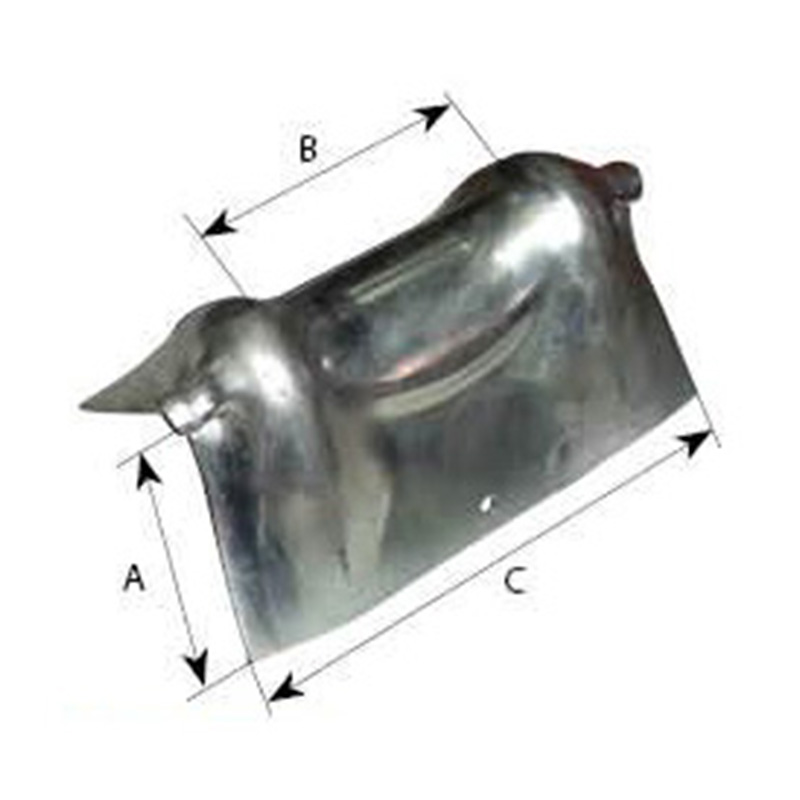 Steel Corner Protector for Securing Sling Edges During LiftsA durable metal guard that shields both cargo and sling from sharp edges, reducing wear and tear during transport. Available in two sizes, this accessory is a low-cost safeguard for high-strength textile slings.View Product →
Inspection and Care: What Keeps a Lifting Sling Safe
Pre-Use Inspection: What to Check Every Time
Defects That Require Removal from Service
Storage and Handling
Common Lifting Sling Mistakes and Their Consequences
Why Manufacturer Quality Matters in a Lifting Sling
Final Thoughts
Recommended News
-
From structure to performance, a comprehensive explanation of high-strength polyester polyester round sling
-
A comprehensive analysis of the functions, efficiency improvement, maintenance and troubleshooting of pallet trucks
-
How to make roadside assistance faster and more efficient with a tow belt?
-
What are the Key Techniques and Best Practices for Inspecting Steel Wire Ropes for Wear, Tear, and Potential Failures?
Copyright © NingBo Jiangdong Tianye Rigging Co,Ltd. Rights Reserved.
 Wholesale Webbing Hardware Manufacturers