 English
 Español
 عربى
عربى

Search by posts
Product category
Industry News
 By Admin
What Is Steel Wire Rope Used For? Complete Industrial Applications Guide
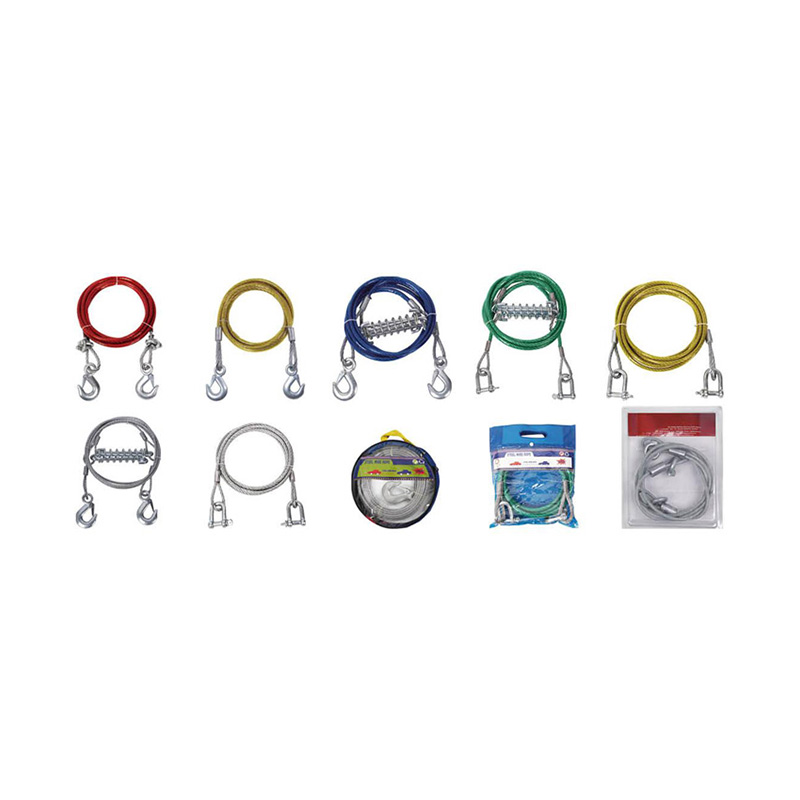
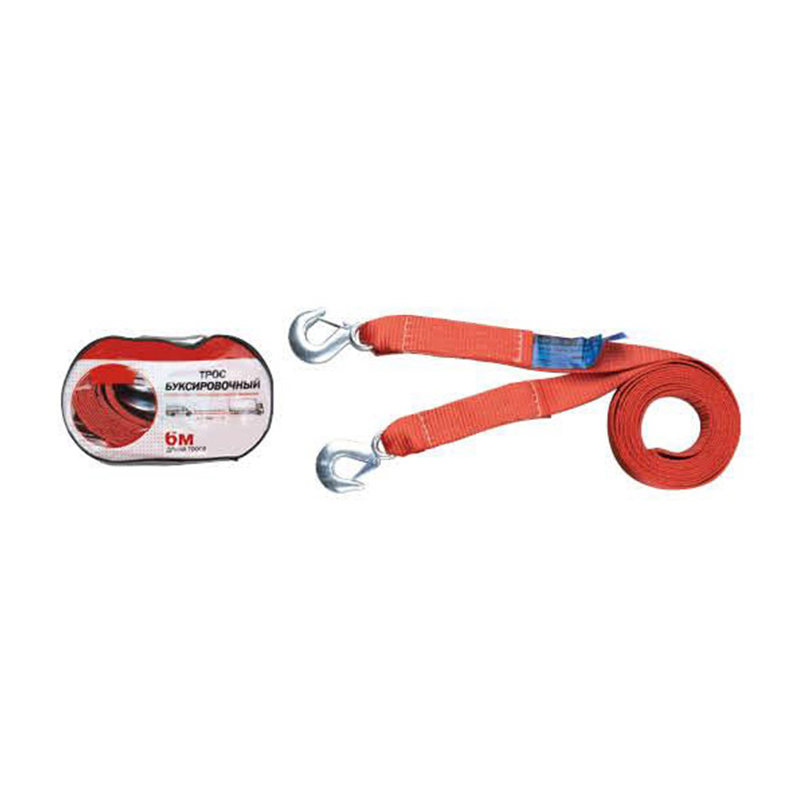
A rigger in a precast plant reaches for a six-strand wire rope sling to lift a 12-ton concrete beam off a casting bed. A flatbed driver uses a galvanized steel wire rope lashing to stop a steel coil from creeping during an overnight run. On a yacht marina, a worker rigs a stainless steel cable to hoist an outboard motor onto a transom. Three very different jobs, the same flexible tension member. The short answer is that steel wire rope is used to lift, pull, and hold heavy things. The practical answer spans cranes, hoists, wire rope slings, towing gear, cargo lashings, suspension structures, and marine and mining equipment. It is the preferred material whenever a load needs high strength in a small diameter, the rope must bend around sheaves, and the environment is too hot, wet, or abrasive for fibre rope. This article explains the main uses of steel wire rope, how construction and termination change performance, and what to check before putting it into service. Steel wire rope is made from individual steel wires twisted into strands, with several strands laid around a core. The number of strands and wires per strand controls flexibility and wear resistance. A 7x7 rope — seven strands of seven wires — is stiff, hard-wearing, and holds its roundness, so it suits standing rigging and pull cables. A 7x19 rope has thin outer wires and bends more easily, so it suits running gear such as winch cables and crane pendants. A 6x36 rope with an independent wire rope core is a typical crane hoist rope because it combines flexibility with crush resistance. Material finish follows the environment. Galvanized wire handles outdoor moisture; bright wire works in protected, lubricated installations; stainless steel grade 304 or 316 is the choice for marine and chemical exposure. Once you know the construction and finish, the applications become easier to map. The biggest single use of steel wire rope is in lifting equipment. Mobile cranes, tower cranes, overhead cranes, and gantry cranes all rely on wire rope as the flexible load-bearing element. The rope runs over sheaves, bends under tension, and sees thousands of stress cycles, so lifting ropes are selected with a construction such as 6x36 and an independent wire rope core, lubricated and matched to the sheave diameter specified by the crane manufacturer. Wire rope is also the working line of many winches and hoists. Pulling a machine into position, tensioning a power line, launching a boat, or dragging a load across a shop floor all use wire rope wound on a hand winch or a powered drum. The same rope can be rearranged with snatch blocks to multiply force or change the pulling direction, which is why wire rope and pulleys appear together on almost every rigging site. Elevator ropes deserve a separate mention: they are rotation-resistant, high-safety-factor ropes designed to run at low speed over small sheaves while keeping the car stable. They are a specialized family within lifting wire rope, not a general-purpose product. Many buyers who ask what steel wire rope is used for are really asking whether it is right for lifting slings. The answer is yes: wire rope slings are standard rigging in steel mills, precast concrete plants, shipyards, and construction sites. A wire rope sling is a finished lifting assembly — a length of rope with eyes at the ends and sometimes hooks or master links — and it is chosen when the load is heavy and the lifting point is limited in size. A hand-spliced sling is made by tucking the strand tails of the rope back into its own body to form an eye. The splice remains flexible, can be inspected by eye, and keeps roughly 80 to 90 percent of the rope’s breaking load. A swaged sling uses a pressed metal sleeve over the rope end to form the termination. Swaged assemblies produce a compact, tidy eye, deliver high and consistent efficiency, and are the common choice for factory-rated slings. The capacity of a sling changes with the hitch. A vertical leg takes the full rating; a choker hitch takes about 75 percent; a basket hitch on two legs can double the capacity when the legs are vertical, but capacity drops quickly as the angle between legs opens. Termination choice affects the sling rating as much as the rope itself. Cable sockets, thimbles, hooks, and wire rope grips each clamp or socket the rope end in a different way, and the efficiency of the weakest component becomes the efficiency of the whole assembly. Steel wire rope is common on tow trucks, recovery winches, and ship-to-ship towing gear. Its advantages are clear: it resists cutting, heat, and sunlight, and it does not stretch. That makes it an efficient pulling member when a grounded vehicle needs to be winched over a short distance or a trailer needs a cable that will not be cut by a sharp chassis edge. Recovery crews generally prefer synthetic tow straps for dynamic pulls, because the elastic stretch cushions the shock when a stuck vehicle breaks free. Steel wire rope has no such give, so the risk of snap-back is real. The safe rules are to use a rope with a working load well above the expected pull, attach a dampener, keep everyone away from the line, and never use a wire rope that has been tied into a knot to shorten it. Steel wire rope also works as a lashing material on flatbed trailers, railcars, and ship decks. It is the right choice when the cargo has sharp edges, high temperature, or a very heavy unit weight, because synthetic webbing burns and cuts. A typical wire rope lashing is a length of galvanized rope with an eye at each end, tensioned by a load binder or a winch, with edge protectors under the rope where it touches metal corners. Lashing systems are designed with a much lower safety factor than lifting systems — often 2:1 or 3:1 at the payload — so the tightening direction and the condition of the rope matter. A coil that shifts in a container, a machine that slides on a trailer, or a log that rolls on a truck bed is almost always a lashing that was not tensioned or inspected correctly. Outside lifting gear, steel wire rope acts as a structural tension member. Suspension bridges, cable-stayed roofs, guy lines for telecom towers, and mast stays all carry permanent loads through zinc-coated wire ropes that must last decades. The same tensioning principle appears on industrial machinery, from conveyor anchors to stage rigging for heavy sound and lighting equipment. In mining and quarrying, wire rope is the hoist rope in shaft elevators, the pulling rope on draglines, and the drilling line on blast-hole rigs. In oil and gas, drilling lines support the traveling block and endure heavy shock loads. In marine work, wire rope appears as container lashing on deck, as trawl warp on fishing vessels, and as the line between a tug and a barge. These environments push the buyer toward galvanized or stainless steel rope and toward terminations that can be inspected without dismantling the assembly. Choosing between the three families of lifting and lashing products is a routine purchasing decision, and the material properties decide the fit. Choose wire rope when the job needs the highest strength in the smallest cross-section, when the rope must run over sheaves, or when heat and abrasion rule out synthetics. Choose chain when the load is dragged or the surface is sharp enough to cut strand wires. Choose synthetic when shock absorption, load protection, or light weight is the priority. Work through these five steps in order, because each decision changes the next one. When the load case matches a common category such as crane lifting, sling rigging, or cargo lashing, the fastest route is to review the application page of a rigging manufacturer and confirm that the supplier covers both the rope and the hardware. Steel wire rope wears in four ways: broken wires from bending fatigue, abrasion, corrosion, and damage from poor operation. The most useful inspection signal is the number of broken wires visible along the rope. When several broken wires are found in a single lay length of a six-strand rope, most hoisting standards reject the rope. Diameter measurement is the second test: a local reduction of about 10 percent of the nominal diameter is a reject condition for most lifting duties. Lubrication extends life because most fatigue damage starts between wires inside the rope. A lubrication schedule that matches the duty cycle is as important as the rope specification itself. For a more detailed walk-through of wire rope wear and rejection criteria, the inspection techniques article covers the subject in depth. Steel wire rope is used wherever heavy loads must be lifted, pulled, or held in place under tension. Cranes and hoists use it for lifting; slings use it for rigging; winches use it for towing and pulling; lashings use it for securing cargo; bridges and towers use it as a structural tendon; and marine, mining, and drilling operations use it in some of the harshest conditions in industry. Each of those uses places a different demand on rope construction, core, material, and termination. Start with the working load, then the environment, then the bending geometry, and the right rope will be nearly self-evident. A manufacturer that makes the rope, the slings, and the connecting hardware in one factory — as we do in Ningbo — can keep that specification coherent and support it after delivery. Buyers who start with the application rather than the price are the ones who get the service life they planned for.What Steel Wire Rope Is, and Why Construction Matters
Lifting and Hoisting in Cranes, Hoists, and Elevators
 Steel Wire Ropes for Lifting, Derricking and Hauling ApplicationsThis category covers general-purpose wire ropes used in winches, hoists and rigging. The surrounding text highlights their role in pulling, tensioning and launching tasks, making them relevant for understanding rope selection beyond slings.View Product →
Wire Rope Slings and Rigging Systems
Hand-spliced slings
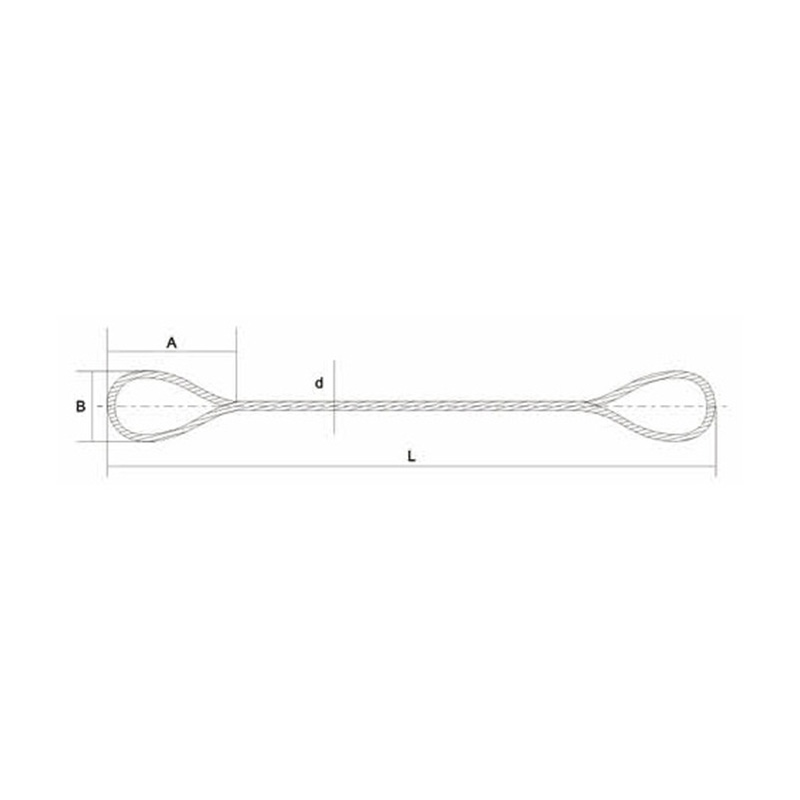 Hand Spliced Steel Wire Rope Sling with Eye TerminationThis sling is made by splicing galvanized or ungalvanized wire rope, with optional PVC coating or ferrule. It offers 80-90% breaking load efficiency and is available in multiple diameters and strength grades, fitting the preceding discussion on flexible splice assemblies.View Product →
Swaged slings
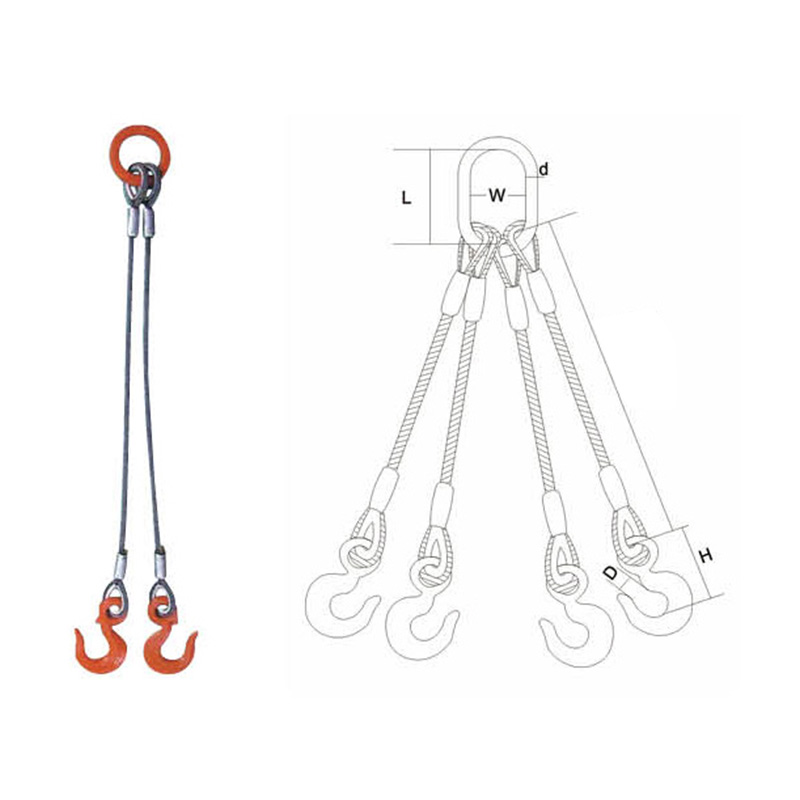 Swaged Steel Wire Rope Sling with Pressed Sleeve TerminationThis factory-rated sling uses a pressed metal sleeve for a compact, efficient eye. Rated loads are listed for various diameters based on 6x37 construction, and the following paragraph explains how capacity varies with hitch type, making it a key choice for consistent performance.View Product →
Included angle between legs
Capacity vs single-leg rating
0° (vertical legs)
100%
60°
87%
90°
71%
120°
50%
150°
26%
Towing and Vehicle Recovery
Load Securing and Cargo Lashing
Tension Structures, Marine, Mining, and Drilling
Wire Rope vs Chain vs Synthetic Slings
Property
Steel wire rope
Steel chain
Polyester slings
Strength for a given diameter
Very high
High
Low by volume
Weight
Medium
Heavy
Light
Abrasion resistance
Good
Excellent
Poor without protection
Heat resistance
High
Very high
Low
Flexibility around small edges
Moderate
Low
Excellent
Elongation under load
Low
Low
High
Failure warning
Broken wires seen
Distorted links
Frayed fibres
Typical uses
Crane rope, slings, towing, lashing
Chain slings, dragged loads
Shock-absorbing lifts, finished goods
How to Choose the Right Steel Wire Rope
Inspection and Safe Service Life
Choosing Wire Rope by the Application
Recommended News
-
From structure to performance, a comprehensive explanation of high-strength polyester polyester round sling
-
A comprehensive analysis of the functions, efficiency improvement, maintenance and troubleshooting of pallet trucks
-
How to make roadside assistance faster and more efficient with a tow belt?
-
What are the Key Techniques and Best Practices for Inspecting Steel Wire Ropes for Wear, Tear, and Potential Failures?
Copyright © NingBo Jiangdong Tianye Rigging Co,Ltd. Rights Reserved.
 Wholesale Webbing Hardware Manufacturers