 English
 Español
 عربى
عربى

Search by posts
Product category
Industry News
 By Admin
What Is a Type 3 Lifting Sling? Flat Eye Web Sling Basics Explained for Riggers
Imagine a rigger on a loading dock needs to lift a 1,500 kg steel beam from a flatbed trailer. The sling he picks up is likely a single-ply polyester web sling with flat sewn eyes at both ends. That configuration is a Type 3 lifting sling, and it is one of the most widely used synthetic web slings in industrial lifting. Put simply, a Type 3 lifting sling is a flat-eye web sling in which the loop eyes are formed by folding the webbing over flat and stitching it in place. The eyes sit in the same plane as the sling body, which is why the entire sling lies flat when placed on the floor. That simple geometry is the reason it performs so well in vertical, choker, and basket hitches. A Type 3 lifting sling is identified by its eye configuration. It is also called a flat-eye sling or an eye-and-eye sling with flat eyes. In this design, the webbing is not cut and spliced at the eye; it is folded back on itself to form a loop, then the loop tail is stitched to the body. Because the fold is flat, the eye opening lies in the same plane as the body. The main parts of a Type 3 sling are: Most Type 3 slings are produced in single-ply or multi-ply versions. A single-ply sling uses one layer of webbing; multi-ply slings stack two or more layers to increase capacity without making the sling stiff or difficult to handle. In the same type-numbering system, a Type 4 sling has a twisted eye. The eye is turned 90 degrees from the plane of the body, which changes the way the sling connects to lifting points. For most lifting jobs, the Type 3 flat-eye sling is the simpler and more predictable choice. Use a Type 4 only when the lift geometry demands an eye that opens at right angles to the body. The working load limit, or WLL, printed on a Type 3 sling tag is the maximum load allowed for a vertical hitch. In other hitch configurations, the capacity changes must be accounted for: In every case, the tag is the reference. Do not rely on color coding alone; many tagging systems use color to indicate capacity, but the tag is the only legal and traceable document. When two legs of a Type 3 sling are used at an angle, the tension in each leg is higher than half the load. The table below shows the multiplier for a two-leg bridle at common angles from horizontal. For example, with a 1,000 kg load on two legs at 45 degrees, each leg carries 1.41 x 500 kg, or 705 kg. If the sling tag shows a vertical WLL of 800 kg, the two-leg lift at 45 degrees is still acceptable; at 30 degrees, each leg would carry 1,000 kg, above the vertical WLL. Always check the tag value and the effective capacity. Also keep the sling body away from sharp edges. If the load has corners with a radius smaller than the sling's minimum D/d ratio, use an edge protector or a heavier sling. A Type 3 sling is not designed for dragging or sliding across abrasive surfaces. Inspection is where the flat-eye design is easiest to check. Remove the sling from storage and lay it flat. Routine maintenance is just as important as inspection. The condition of the webbing and stitching determines service life, so follow the manufacturer's maintenance guidance and keep slings in a dry, separate rack. For a detailed checklist, see our article on routine maintenance of lifting belts. When you order a Type 3 sling, start with three questions: what is the heaviest load, what hitch will be used, and how long is the reach? For heavy, frequent lifts, choose a wider body or multi-ply construction rather than simply increasing the tension on a narrow sling. For overhead lifts, confirm the lifting points can accept a flat eye; if they are oriented differently, consider a shackle. We manufacture reusable Type 3 webbing slings in a range of widths and capacities. Flat sewn eyes, full-width stitching, and clear tags are standard. If your application needs a custom eye length, a different color, or extra edge guards, our factory can produce it to your specification. A Type 3 lifting sling might look like a simple strip of webbing, but the difference between a safe sling and a failed sling is in the stitching pattern, fiber quality, tension control, and traceability. At Tianye Rigging, our factory has produced polyester webbing slings since 2009 and exports to more than 40 countries. We use high-tenacity continuous polyester, consistent stitch tension, and each sling carries a permanent label with the rated WLL. Our in-house production also lets us keep lead times short and adapt to OEM requirements. If you are planning a new rigging program or want to standardize your lifting equipment, talk to our team. We can review your load requirements, recommend the right Type 3 sling, and provide the supporting services you need. Contact us through our service and support page. A Type 3 lifting sling is not just a commodity woven strap. Its flat-eye construction affects how the sling seats in a hook, how it wears in a choker, and how clearly it can be inspected. Choose the right capacity, match the hitch geometry, and inspect the eyes and stitching often. When you start with a correctly made Type 3 sling from a manufacturer who understands rigging, you get predictable performance and a safer lift.What Exactly Is a Type 3 Lifting Sling?
Type 3 vs. Type 4: Flat Eye vs. Twisted Eye
Feature
Type 3 Flat Eye
Type 4 Twisted Eye
Eye orientation
Same plane as sling body
90° to sling body
Lying flat
Yes; easy to store and inspect
No; eye stands away from body
Hook seating
Full-width flat bearing surface
Narrower, angled bearing point
Choker use
Good; slight edge stress at choke
Can reduce body twist, but eye is stiffer
Typical applications
General lifting, vertical and basket hitches
Special connection geometry or restricted headroom
How a Type 3 Sling Works in Different Hitches
Why Sling Angle Matters
Angle from horizontal
Multiplier on half the load
90°
1.00
60°
1.15
45°
1.41
30°
2.00
Inspecting a Type 3 Sling Before Use
Selecting the Right Type 3 Lifting Sling
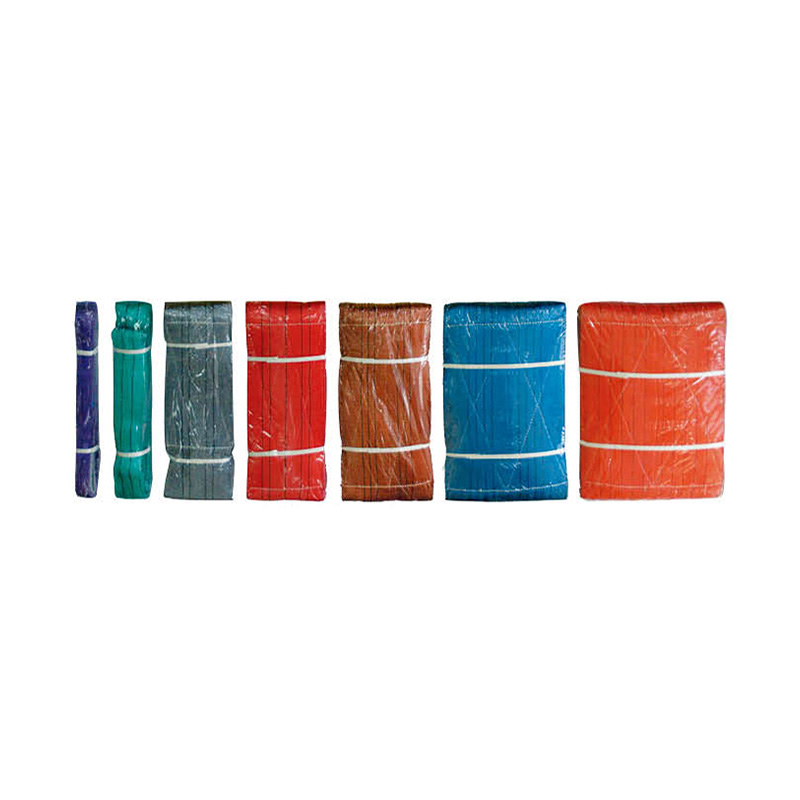 Reusable Webbing Sling with Custom Options and Full TraceabilityThis reusable polyester webbing sling is manufactured to international standards, available in various plies, eye styles, and lengths, with individual numbering for full traceability and safety assurance.View Product →
Why Buy a Type 3 Sling from a Specialized Manufacturer
Recommended News
-
From structure to performance, a comprehensive explanation of high-strength polyester polyester round sling
-
A comprehensive analysis of the functions, efficiency improvement, maintenance and troubleshooting of pallet trucks
-
How to make roadside assistance faster and more efficient with a tow belt?
-
What are the Key Techniques and Best Practices for Inspecting Steel Wire Ropes for Wear, Tear, and Potential Failures?
Copyright © NingBo Jiangdong Tianye Rigging Co,Ltd. Rights Reserved.
 Wholesale Webbing Hardware Manufacturers